

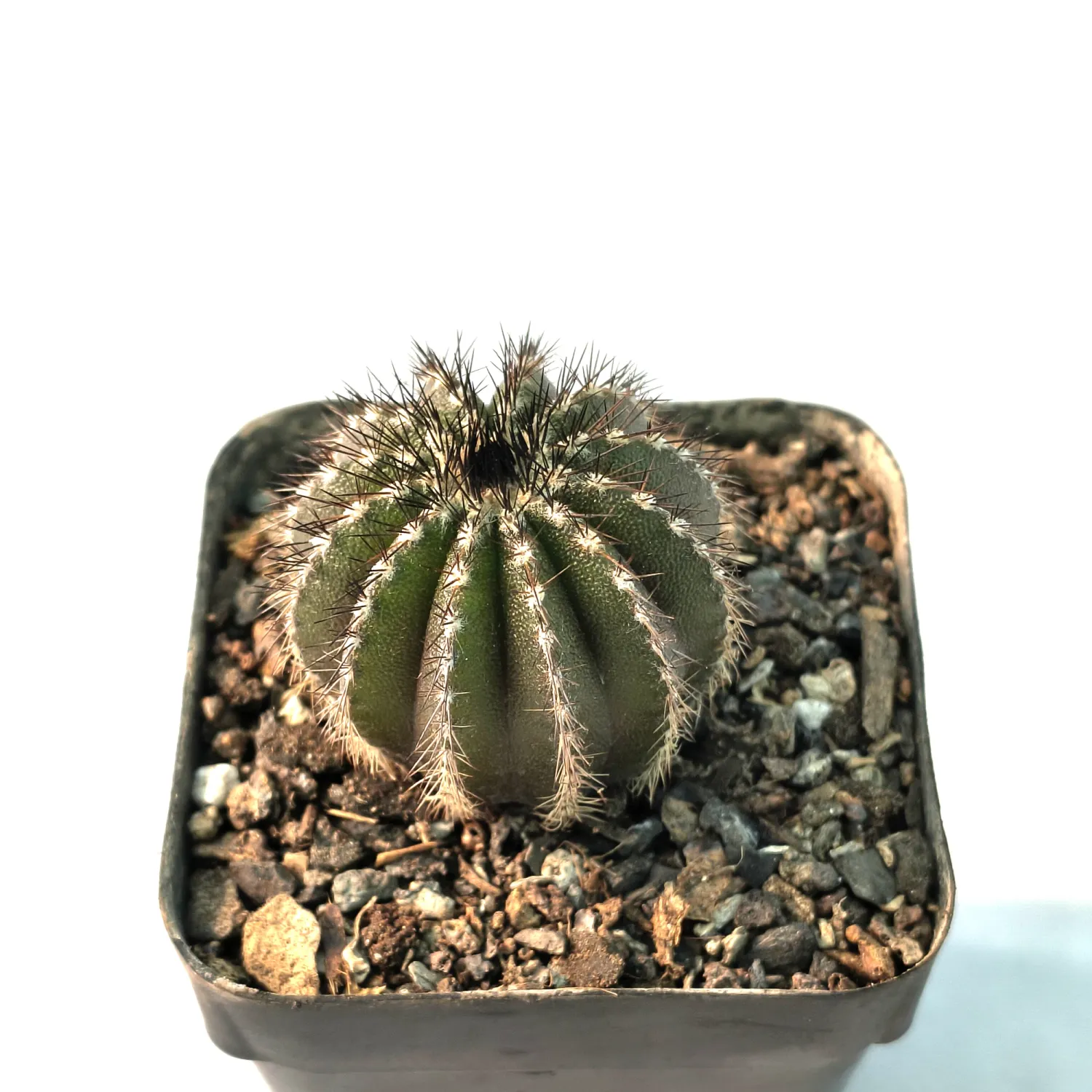
Uebelmannia pectinifera
Product Details
The Sculpted Treasure: Uebelmannia pectinifera
A masterwork of geometric precision, this rare Brazilian jewel is the ultimate trophy for the serious succulent connoisseur.
- Origin & History of Name The genus name Uebelmannia honors Werner Uebelmann, the Swiss nurseryman and cactus explorer who introduced the genus to European collectors in the 1960s.
The specific epithet pectinifera is derived from the Latin pecten (comb) and ferre (to bear), referring to the comb-like arrangement of spines that run down the ribs. - Morphology This cactus features a globular to cylindrical stem with a distinctive dark purple-to-black epidermis (skin) that often appears dusted with white scales. It is characterized by 15–18 sharp-edged costae (ribs) topped with dense, dark spines that form a continuous "comb."
Small, funnel-shaped yellow flowers emerge from the apex (top) during the growing season. - Habitat & Origin This is a wild species native to the state of Minas Gerais, Brazil.
It grows in high-altitude rocky outcrops among quartz sands. Our specimens are nursery-grown from seed to ensure the protection of wild populations, as the species is currently listed as Endangered due to habitat loss and historical over-collection. - Cultivation Profile
- Substrate: Strictly mineral-based mix. Use a blend of 70% crushed quartz or pumice and 30% coarse sand with minimal organic matter to mimic its acidic native soil.
- Light: Bright, indirect sunlight. In the Indian subcontinent, protect from harsh afternoon sun (above 35°C) to prevent epidermis scorching; use 50% shade netting during peak summer.
- Water/Dormancy: Water deeply but infrequently when the substrate is bone-dry. In India, maintain a dry dormancy during the winter months (November–February) and avoid watering during periods of high humidity or monsoon rainfall to prevent root rot.
5. Scientific/Historical Anecdote Upon its discovery in 1966 by Buining, the Uebelmannia genus caused a sensation in the botanical world because it looked like a hybrid of several different cactus families. DNA analysis later confirmed it is closely related to the Echinocactus genus, despite its radically different appearance and isolated geographic location in the Brazilian highlands.
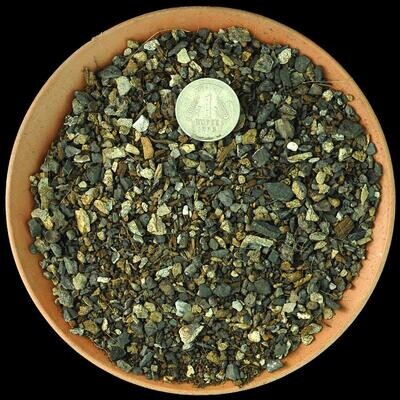


Cactus & Succulent Planting Mix COARSE (aka Cactus Soil Mix or Succulent Soil Mix)
Cactus & Succulent Planting Mix COARSE (aka Cactus Soil Mix or Succulent Soil Mix)
Washed, Free-Draining Mineral Mix for Cactus & Succulents
SKU MNS003
₹44.85


Cactus Seed Planting Mix
Cactus Seed Planting Mix
Sterile, Fine-Grain Media for Cactus & Succulent Seeds
SKU MNS005
₹74.85