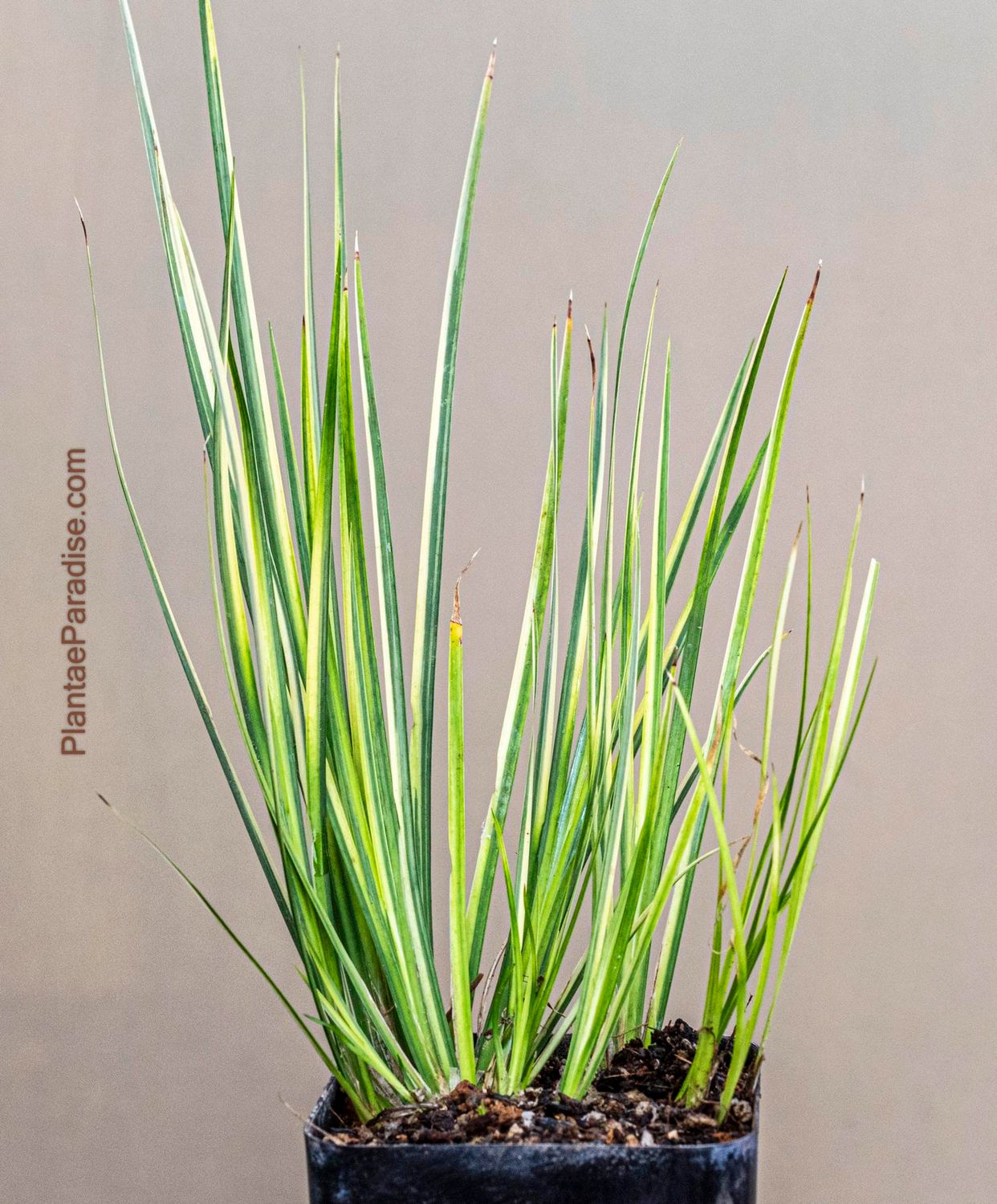
Bring a touch of serene elegance and vibrant texture to your garden or indoor space with the Japanese Variegated Sweet Flag, Acorus gramineus ‘variegatus’. This enchanting grass-like perennial offers a refreshing display of fine, striped foliage that dances with subtle contrasts, creating a soothing yet striking presence. Perfect for adding year-round interest to pond edges, moist borders, or even as an exquisite indoor accent, this versatile plant is a testament to nature's delicate artistry.
1. Origin of Name
The genus name, Acorus, has ancient roots, derived from the Greek word "akoron" or "akoris," an old name for a plant with a fragrant root, possibly referring to the closely related Acorus calamus. The specific epithet, gramineus, is Latin for "grassy" or "grass-like," aptly describing its fine, linear foliage. The cultivar designation, ‘variegatus’, is Latin for "variegated," signifying the plant's distinctive striped leaves. The common name, "Sweet Flag," refers to the pleasant, aromatic fragrance released when the leaves or rhizomes are bruised, a characteristic more pronounced in its larger cousin Acorus calamus, but subtly present here. "Japanese" highlights its primary geographical origin and its long history of cultivation in Japanese gardens, where its delicate form and clean lines are highly prized for their aesthetic harmony.
2. Origin of Plant
Acorus gramineus is a species native to the wetlands and aquatic margins of East Asia, particularly prevalent in Japan, Korea, China, Thailand, and the Philippines. In its natural habitat, it thrives along the banks of streams, ponds, and in boggy, marshy areas, often forming dense colonies in consistently moist to wet soil. While the species itself has been known and utilized in these regions for centuries, the specific 'variegatus' form is a cultivated selection, likely discovered and propagated in horticulture for its enhanced ornamental qualities, particularly its striking striped foliage. Its long history in traditional Asian gardening underscores its adaptability and beauty in aquatic and semi-aquatic landscape designs.
3. Description
The Japanese Variegated Sweet Flag is a charming, evergreen, grass-like perennial that forms dense, upright clumps of slender foliage. Its leaves are flat, narrow, and sword-shaped, growing gracefully upwards and slightly arching at the tips. The most captivating feature of the ‘variegatus’ form is its vibrant, longitudinal stripes of creamy white or pale yellow that contrast beautifully against the rich green base of each leaf. This variegation is consistent and creates a bright, cheerful texture that adds year-round interest. The plant typically reaches a compact height of 15-30 cm (6-12 inches), making it an ideal choice for small spaces or detailed planting schemes. While the foliage is its main ornamental draw, mature plants can produce small, inconspicuous, greenish-yellow flower spikes (spadixes) that emerge from among the leaves, though these are typically not a prominent feature. When bruised, the foliage releases a subtle, pleasant, sweet aroma.
4. Conservation Status
The species Acorus gramineus is generally considered common and widespread across its native range and is not currently listed as threatened or endangered by major conservation organizations. The 'variegatus' form is a horticultural cultivar, meaning it was developed and propagated in cultivation, not collected from the wild as a distinct endangered entity. Its widespread availability and ease of cultivation ensure that no pressure is placed on wild populations.
5. Care
The Japanese Variegated Sweet Flag is wonderfully adaptable and relatively easy to care for, thriving in consistently moist conditions.
- Watering: This plant loves water! It requires consistently moist to wet soil and can even tolerate shallow standing water, making it excellent for water gardens or bog conditions. Do not allow the soil to dry out completely.
- Soil: Prefers a rich, fertile, and moist soil. It can adapt to a range of soil types, including heavier clay, especially in boggy situations. For containers, a standard potting mix with good water retention is suitable.
- Light: Thrives in partial shade to full sun. In hotter climates, some afternoon shade is beneficial to prevent leaf scorching. The variegation tends to be more pronounced and vibrant in brighter light conditions.
- Temperature: Highly cold-hardy, typically hardy in USDA Zones 5-10. It can tolerate light frosts and overwinter outdoors in many regions. If grown indoors, protect from extreme temperature fluctuations.
- Tips: A superb choice for pond margins, stream banks, bog gardens, or container water features. Indoors, ensure it receives bright light and its soil remains consistently damp. Divide clumps every 2-3 years in spring to maintain vigor and spread.
6. Engaging Anecdote
The genus Acorus, particularly its larger relative Acorus calamus, holds a fascinating place in ancient history and ethnobotany. Known since antiquity, "Sweet Flag" was used by Egyptians, Romans, and Greeks for its aromatic and medicinal properties, often crushed to release its fragrance or used in traditional remedies. In China and India, it has been a staple of Ayurvedic and traditional Chinese medicine for centuries, believed to improve memory, clarity of thought, and treat various ailments. While Acorus gramineus has a less pronounced fragrance than A. calamus, its subtle sweetness, combined with its crisp, upright form, earned it a cherished spot in traditional Japanese gardens. Here, it was often planted around stone lanterns or water features, its delicate variegated foliage providing contrast and a sense of serenity. It was not merely a plant but a living texture, enhancing the contemplative atmosphere of these sacred spaces. Owning a Japanese Variegated Sweet Flag is like holding a miniature piece of this rich cultural and botanical history, a tranquil, fragrant, and visually delightful reminder of nature's timeless elegance and its enduring connection to human appreciation.