

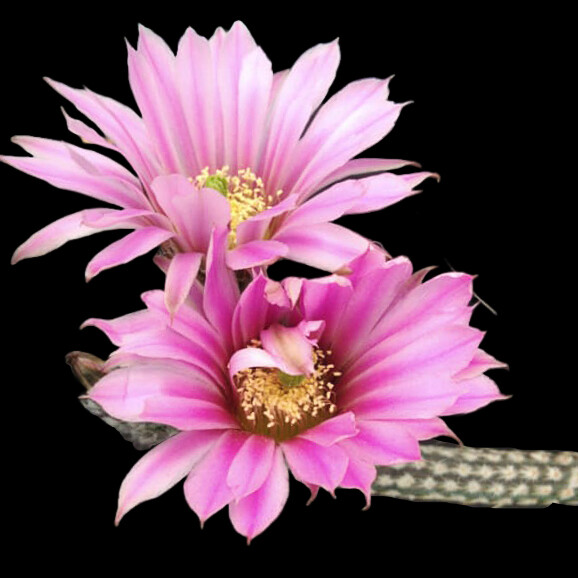
Wilcoxia poselgeri
Product Details
Desert Lace: Wilcoxia poselgeri
A rare subterranean wonder, this "Dahlia Cactus" hides a massive tuberous root system beneath delicate, vine-like stems.
- Origin & History of Name: The genus name Wilcoxia honors Brigadier General Timothy E. Wilcox, a U.S. Army surgeon and botanical collector active in the late 19th century.
The species epithet poselgeri commemorates Heinrich Poselger, a German botanist renowned for his mid-1800s research on Mexican cacti. Though often reclassified under Echinocereus, the name Wilcoxia remains preferred by collectors to distinguish its unique tuberous growth habit. - Morphology: This species is characterized by dimorphic growth. Below the surface, it develops fleshy, dahlia-like storage tubers. Above ground, it produces slender, cylindrical stems (caudiform) covered in a dense grey-white pubescence. These stems feature low costae (ribs) packed with minute, appressed spines that create a lace-like epidermis.
It produces oversized, funnel-shaped flowers in shades of magenta that dwarf the thin stems. - Habitat & Origin: Wilcoxia poselgeri is a wild species native to the arid Chihuahuan Desert, spanning Southern Texas and Northern Mexico (Coahuila, Nuevo León, and Tamaulipas). Our specimens are nursery-grown via sustainable propagation to prevent the poaching of wild tubers, which are slow to mature in habitat.
- Cultivation Profile:
- Substrate: Requires a highly porous, mineral-based mix.
Use 70% inorganic material (coarse sand, perlite, or crushed brick) and 30% organic compost. - Light: Thrives in bright, indirect sunlight.
In the Indian subcontinent, protect from harsh afternoon sun (12 PM – 4 PM) to prevent stem scorching, especially during May and June. - Water/Dormancy: Water deeply when the substrate is completely dry during the growing season. Observe strict winter dormancy from November to February; withhold water entirely as high humidity combined with wet soil will rot the tuberous roots.
- Substrate: Requires a highly porous, mineral-based mix.
- Scientific/Historical Anecdote: Unlike most cacti that rely solely on their green stems for survival, Wilcoxia poselgeri is an "iceberg" of the plant world. In habitat, the thin stems often break off or are grazed by animals, but the plant survives indefinitely because its primary biomass and nutrient reserves are stored in the underground tubers, allowing it to "resprout" once favorable conditions return.
New
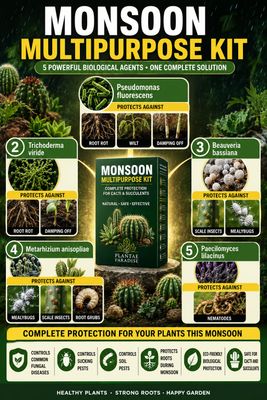
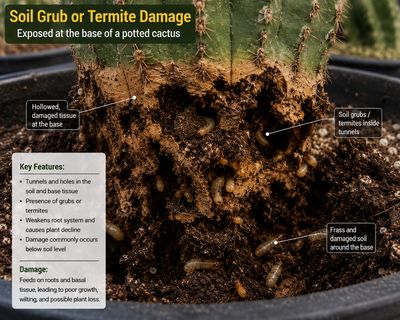
Monsoon Guardian Kit (5 in 1)
Monsoon Guardian Kit (5 in 1)
Complete 5-in-1 biological protection kit for cacti & succulents
SKU MNS024
₹850.00
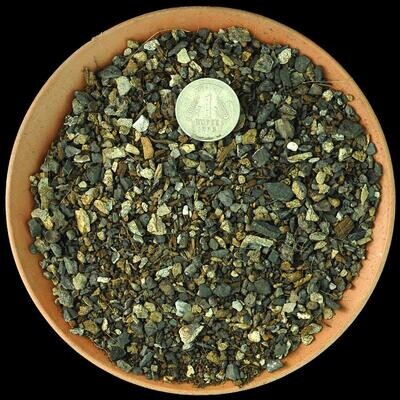
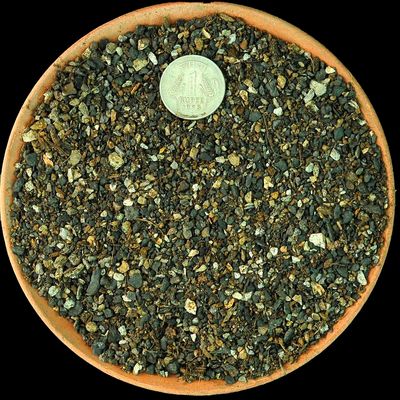
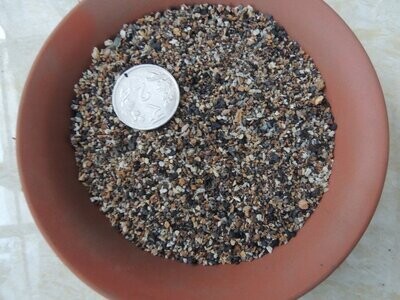
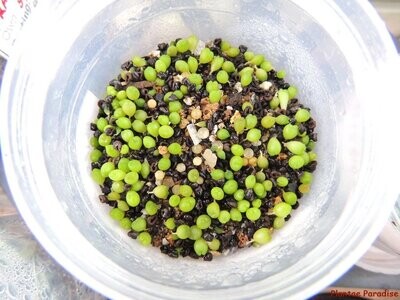
Cactus Seed Planting Mix
Cactus Seed Planting Mix
Sterile, Fine-Grain Media for Cactus & Succulent Seeds
SKU MNS005
₹74.85