

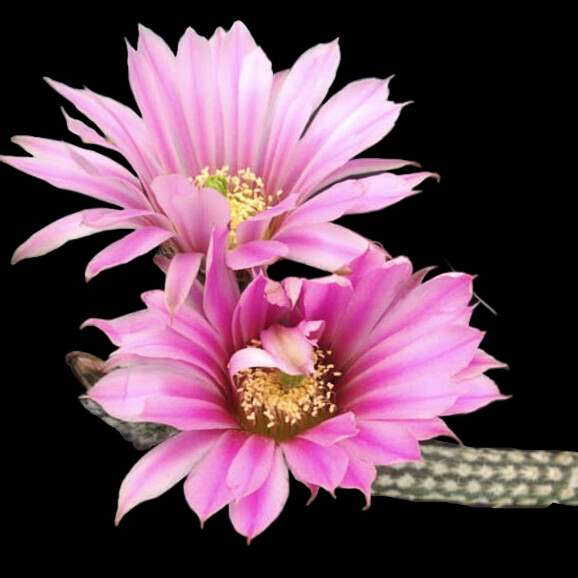
Wilcoxia poselgeri
Product Details
Sculptural Elegance: Wilcoxia poselgeri
A rare, tuberous-rooted gem prized for its slender, pencil-like stems and oversized, satiny pink blossoms.
- Origin & History of Name: The genus name Wilcoxia honors Brigadier General Timothy E. Wilcox, a U.S. Army surgeon and avid plant collector of the late 19th century. The specific epithet poselgeri commemorates Dr. Heinrich Poselger, a German botanist noted for his extensive mid-1800s research on Mexican cacti. While now often taxonomically reclassified under Echinocereus, it remains a staple in specialist collections under its traditional name.
- Morphology: This species is distinguished by its dimorphic growth: a subterranean cluster of dahlia-like tuberous roots that store nutrients, and aerial, cylindrical stems (just 1–2 cm thick). The epidermis is a muted grey-green, featuring 6 to 10 low costae (ribs) covered in fine, appressed spines that give the plant a delicate, fuzzy texture. Its funnel-form flowers are disproportionately large, often exceeding the width of the stems.
- Habitat & Origin: This is a wild species native to the Chihuahuan Desert, spanning Southern Texas and Northern Mexico (Coahuila, Nuevo León). It typically grows sheltered beneath nurse bushes. Our specimens are nursery-propagated via stem cuttings or seed to ensure the protection of wild desert populations.
- Cultivation Profile:
- Substrate: Requires a highly porous, mineral-based mix (60% grit/pumice, 40% organic) to accommodate the sensitive tuberous root system.
- Light: Bright, indirect sunlight is ideal. In the Indian subcontinent, provide 50% shade cloth during the extreme heat of May and June to prevent epidermal scorching.
- Water/Dormancy: Water deeply when the substrate is completely dry during the growing season (March–September). Maintain strict drought during the winter dormancy to prevent root rot, particularly in the humid coastal regions of India.
- Scientific/Historical Anecdote: Wilcoxia poselgeri is a master of mimicry; in its natural habitat, its thin, brownish stems are nearly indistinguishable from the dry, dead twigs of the shrubs it grows under. This "crypsis" protects the plant from herbivores, making the sudden appearance of its vibrant pink flowers in late spring a startling desert phenomenon.
New
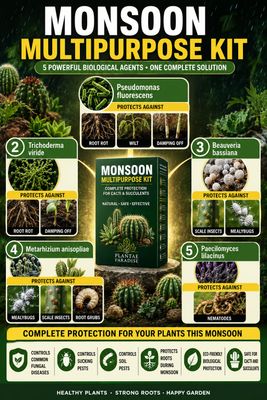
Monsoon Guardian Kit (5 in 1)
Monsoon Guardian Kit (5 in 1)
Complete 5-in-1 biological protection kit for cacti & succulents
SKU MNS024
₹850.00


Cactus Seed Planting Mix
Cactus Seed Planting Mix
Sterile, Fine-Grain Media for Cactus & Succulent Seeds
SKU MNS005
₹74.85

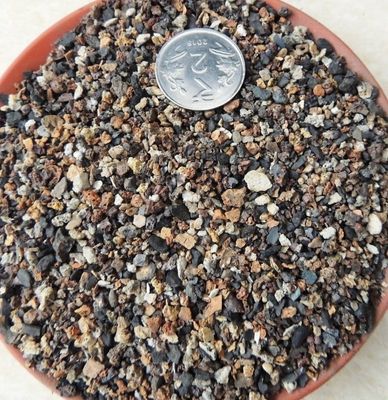

Cactus & Succulent Planting Mix FINE (aka Cactus Soil Mix or Succulent Soil Mix)
Cactus & Succulent Planting Mix FINE (aka Cactus Soil Mix or Succulent Soil Mix)
Fine-Grain Potting Mix for Cactus & Succulent Roots
SKU MNS001
₹39.85