The Secret Language of Cactus Spines

At first glance, every sharp projection on a plant may look the same. But in botany, spines, thorns, and prickles are completely different structures. Understanding these differences not only helps identify plants correctly but also reveals the incredible evolutionary adaptations that allow cacti to thrive in some of Earth’s harshest environments.

If you’ve ever wondered why cactus leaves became needles, you’re about to discover one of nature’s most fascinating survival stories.

Spine vs Thorn vs Prickle: What's the Difference?

Many people casually refer to every sharp structure on a plant as a thorn, but thorns, prickles, and spines are three distinct botanical structures with different origins.

Citrus shrub (lemon) showing thorns

Thorns are modified stems or branches, making them a true part of the plant’s woody framework, as seen in citrus species and bougainvillea. They are deep seated and connected with the vascular bundles.

Rose prickles (Rosa spp.)

Prickles, on the other hand, are small, sharp outgrowths of the plant’s outer skin (epidermis) and cortex, which is why they can be easily broken off, roses are the classic example of prickles.

Astrophytum ornatum showing spines

Spines are modified leaves or parts of leaves, and in cacti they develop from specialized structures called areoles, a unique feature of the cactus family.

While all three serve a similar purpose-protecting the plant from herbivores-they differ significantly in their structure, development, and evolutionary origin.

Fun Fact: Cacti are unique because their spines grow from specialized cushion-like structures called areoles, a defining characteristic of the cactus family.

Why Do Cacti Have Spines?

Spines are much more than natural weapons. They perform several vital functions that help cacti survive extreme desert conditions.

1. Protection Against Herbivores

Sharp spines discourage animals from eating the water-rich stems of cacti.

2. Natural Sun Protection

Dense spines create shade over the stem, reducing direct sunlight and preventing overheating.

3. Water Conservation

Spines slow air movement around the plant, reducing water loss through evaporation. In some species, they also help capture moisture from fog and dew.

15 Fascinating Types of Cactus Spines

Every cactus species has its own unique spine pattern. Here are fifteen remarkable spine types that collectors and photographers love to identify.

1.Radial Spines - The Border

These spines radiate outward like the spokes of a wheel, creating a symmetrical border around each areole.

Examples: Echinocactus grusonii, Mammillaria bombycina, Ferocactus wislizeni, Coryphantha vivipara, Rebutia heliosa

Echinocactus grussonii
Ferocactus wislizeni

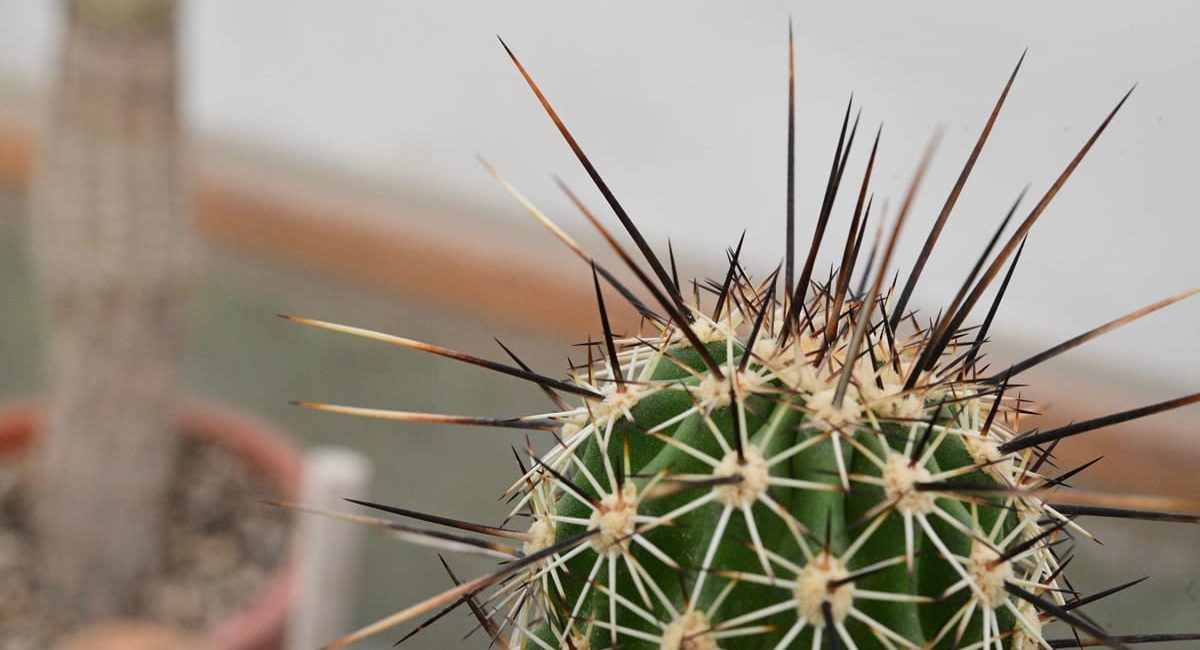
2. Central Spines - The Protector

Larger and stronger than radial spines, central spines project outward from the center and provide additional defense.

Examples: Ferocactus wislizeni, Echinocactus horizonthalonius, Mammillaria pottsii, Stenocactus coptonogonus, Neobuxbaumia polylopha

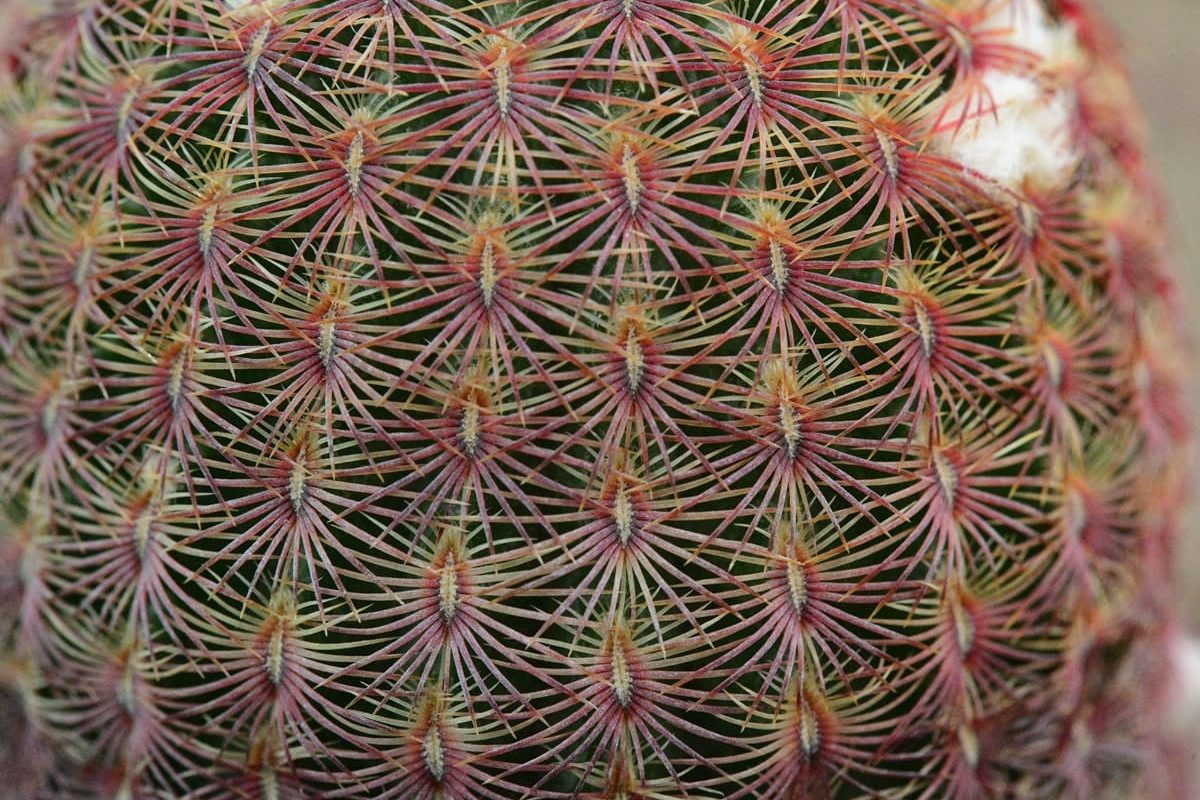
3. Pectinate Spines - The Comb

These flattened spines lie neatly in parallel rows, resembling the teeth of a comb.

Examples: Echinocereus rigidissimus ssp. rubispinus, Pelecyphora aselliformis, Mammillaria pectinifera, Echinocereus pectinatus, Uebelmannia pectinifera

Echinocereus-rigidissimus-var
Echinocereus rigidissimus var. rubrispinus
Pelecyphora-aselliformis-crest
Pelecyphora aselliformis crest
Mammillaria plumosa

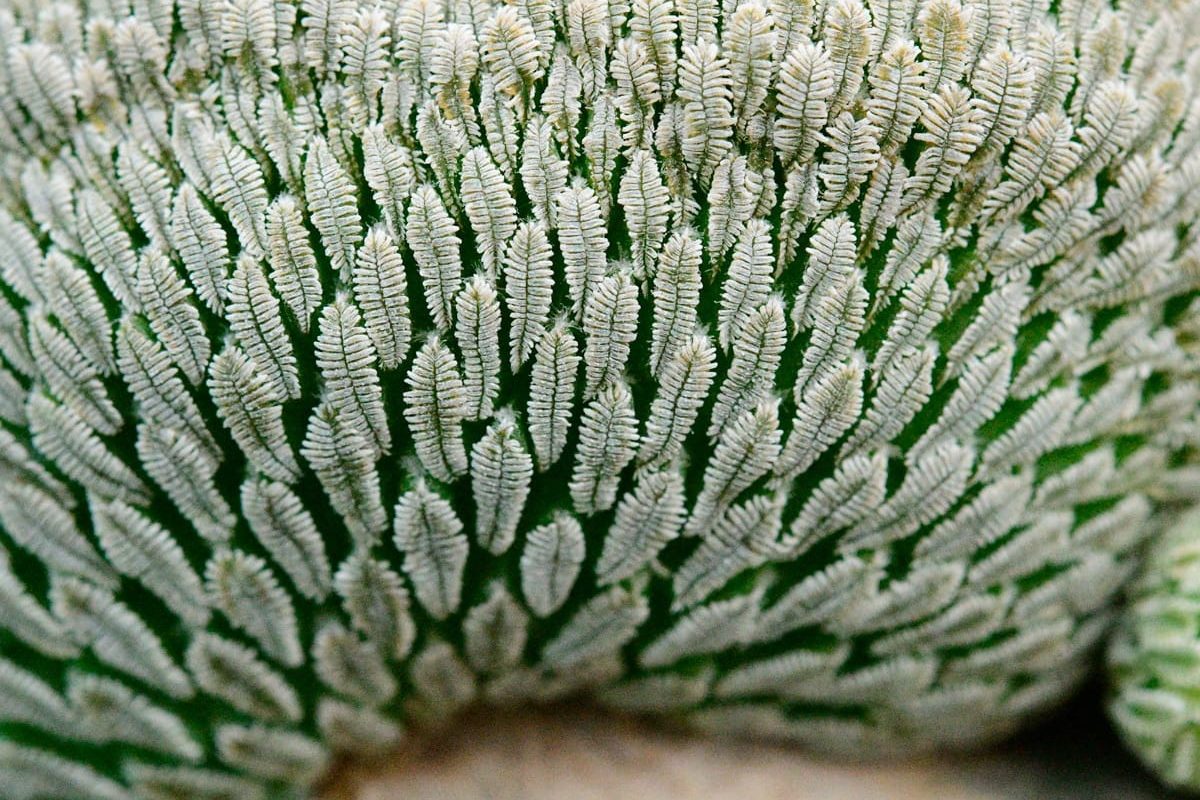
4. Plumose Spines - The Feather

Soft, highly branched spines that resemble delicate feathers or snowflakes.

Examples: Mammillaria plumosa, Mammillaria schiedeana, Mammillaria perezdelarosae, Mammillaria goldii, Mammillaria sanchez-mejoradae

5. Hair-like Spines - The Silk

Long, flexible white spines that resemble flowing hair or wool.

Examples: Cephalocereus senilis, Espostoa lanata, Oreocereus trollii, Cleistocactus winteri

Cephalocereus Senilis Aka Old Man Cactus
Cleistocactus strausii

6. Bristle-like Spines - The Brush

Thin but stiff spines resembling the bristles of a brush.

Examples: Cleistocactus strausii, Pilosocereus pachycladus, Haageocereus pseudomelanostele, Micranthocereus polyanthus

7. Paper-like Spines - The Ribbon

Flat, papery spines that are surprisingly flexible and often harmless to touch.

Examples: Tephrocactus articulatus var. papyracanthus, Leuchtenbergia principis, Tephrocactus alexanderi

Tephrocactus Articulatus var. Papyracanthus
Echinofossulocactus Erectrocentrus
Mammillaria bocasana

8. Hooked Spines - The Fishhook

Curved spine tips designed to snag passing animals and provide extra protection. It is also a means of propagation as the internodes break off and the pups detach and are carried off by the animal to a distance where the pups may root if they find favourable conditions. Thus, this becomes a means of propagation.

Examples: Mammillaria bocasana, Ferocactus emoryi, Ancistrocactus scheeri, Sclerocactus parviflorus

9. Dagger-like Spines - The Blade

Broad, flattened spines that resemble miniature swords.

Examples: Ferocactus latispinus, Homalocephala texensis, Stenocactus Phyllacanthus

Stenocactus Phyllacanthus CH228 ex Stenocactus Tricuspidatus
Cylindropuntia Spinosior

10. Sheathed Spines - The Glow

These spines possess translucent outer coverings that reflect sunlight beautifully.

Examples: Cylindropuntia bigelovii, Cylindropuntia fulgida, Cylindropuntia imbricata

11. Stellate Spines - The Star

Spines radiate evenly to form perfect star-shaped clusters.

Examples: Mammillaria elongata, Astrophytum ornatum, Mammillaria vetula

Mammillaria elongata yellow spines albiflora
Gymnocalycium spegazzinii var. punillense

12. Recurved Spines - The Talon

Backward-curving spines that resemble the claws of a bird of prey.

Examples: Gymnocalycium spegazzinii, Gymnocalycium saglionis, Lobivia ferox

13. Glochids - The Tiny Barbs

Minute, barbed bristles found mainly in Opuntia species. Although tiny, they easily detach and can be surprisingly irritating.

Examples: Opuntia microdasys, Opuntia ficus-indica, Opuntia rufida, Opuntia santarita

Opuntia microdasys RedBrown Glochids
Echinomastus johnsonii var. lutescens
Echinocereus-apachenis
Echinocereus apachenis

14. Zonate Spines - The Banded Beauty

Individual spines display distinct horizontal color bands along their length.

Examples: Echinocereus engelmannii, Ferocactus gracilis, Copiapoa cinerea, Ferocactus fordii

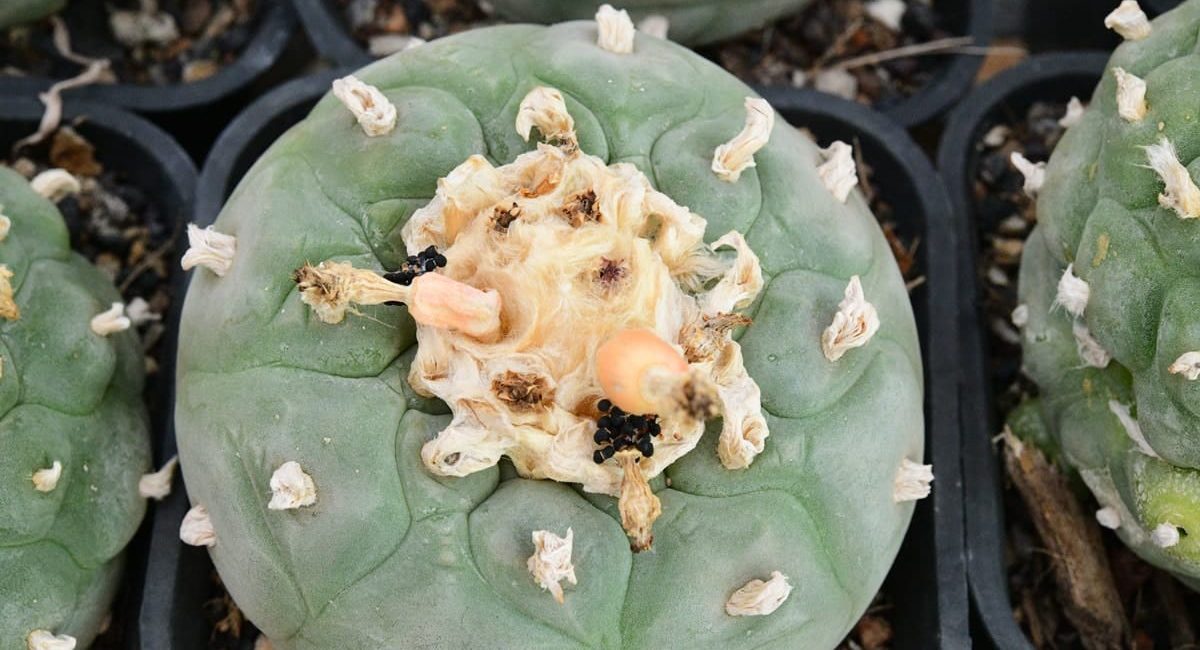
15. Vestigial Spines - The Felted Look

In these species, spines are greatly reduced and replaced by soft woolly tufts.

Examples: Astrophytum asterias, Lophophora williamsii, Astrophytum myriostigma, Blossfeldia liliputana, Ariocarpus retusus

Astrophytum Asterias cv Turtle
Lophophora-diffusa-Var
Lophophora diffusa Var. Koehresii

Did You Know?

Many cactus collectors identify species primarily by their spine arrangement. Spine colour, length, shape, texture, and growth pattern often distinguish closely related species.

Final Thoughts

From silky hairs to razor-sharp daggers, cactus spines are masterpieces of evolution. They protect against hungry animals, conserve precious water, provide shade, and even collect moisture from the atmosphere.

Every spine tells a story of survival, proving that beauty and resilience can exist together in perfect harmony.

“Cacti remind us that strength doesn’t always mean hardness, it can also mean adapting beautifully to life’s toughest environments.

Frequently Asked Questions

Are cactus spines actually leaves?

Yes. Botanically, cactus spines are modified leaves that develop from specialized structures called areoles.

No. Different cactus species have evolved a remarkable diversity of spine shapes, sizes, colours, and arrangements.

Large leaves lose water rapidly. By evolving leaves into spines, cacti dramatically reduce water loss while still protecting themselves from predators and excessive sunlight.